



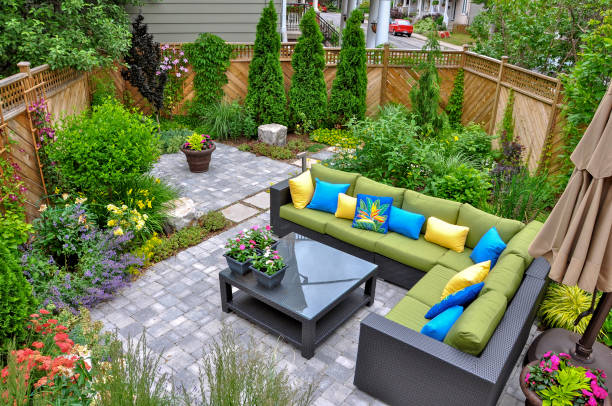
A patio can become one of the most frequently used areas of your backyard. It provides a place for outdoor dining, entertaining, relaxing, and connecting other features throughout the landscape. But before building or replacing a patio, homeowners have an important decision to make: what material should they use?
Paver patios have become a popular option because they combine durability with considerable design flexibility. From simple backyard seating areas to larger outdoor kitchens and entertainment spaces, pavers can be customized around many different properties and lifestyles.
At Prestige Landscape & Design, we provide professional paver installation throughout Dallas and the surrounding DFW area. If you're considering a paver patio, here's what you should know before starting your project.
What Is a Paver Patio?
A paver patio is constructed from individual units installed over a professionally prepared base rather than being poured as one continuous surface.
Pavers are available in different shapes, sizes, textures, and patterns, allowing the finished patio to be customized around the home and surrounding landscape.
They can be used for much more than patios, too. Pavers are also suitable for walkways and other hardscape areas where homeowners want a durable, finished surface.
1. Pavers Offer Excellent Design Flexibility
One of the biggest advantages of paver patio installation is the ability to customize the design.
Depending on the project, homeowners can create different patterns, borders, transitions, and layouts.
This flexibility allows the patio to complement the home's architecture rather than looking like an unrelated addition.
Pavers can also help define different outdoor zones, such as a dining area, lounge space, or outdoor kitchen.
2. They Can Create a More Finished Outdoor Living Space
Placing furniture directly on grass doesn't usually create the same sense of permanence as a dedicated patio.
A paver surface establishes a clear foundation for the outdoor living area and makes the space feel more intentional.
Add landscaping, a pergola, outdoor kitchen, or landscape lighting, and the patio can begin to function like an extension of the home.
3. Individual Pavers Can Be Replaced
One practical advantage of pavers is their individual-unit construction.
If a localized area eventually requires attention, individual pavers can potentially be removed and replaced without rebuilding the entire patio.
This differs from a continuous poured surface, where repairs may be more noticeable.
Proper installation remains essential, however. Pavers still depend on a stable, well-prepared base for long-term performance.
4. Pavers Work With Many Backyard Styles
A paver patio doesn't have to look overly formal or traditional.
The layout and surrounding landscape can be adapted to different design preferences, including:
- Modern
- Traditional
- Rustic
- Natural
- Contemporary
- Transitional
Material selection should take the home's exterior, existing hardscaping, fencing, and landscape design into consideration.
The goal is to create a patio that feels like it has always belonged on the property.
5. They Pair Well With Outdoor Kitchens
If you're considering an outdoor kitchen, the patio underneath it deserves just as much attention as the cooking features themselves.
Pavers can provide a defined surface that visually connects grilling, preparation, dining, and seating areas.
Planning the patio and outdoor kitchen together also helps establish appropriate dimensions and circulation before construction begins.
This is usually more efficient than installing a small patio and discovering later that it doesn't comfortably accommodate the outdoor kitchen you want.
6. Paver Patios Can Incorporate Pergolas
A pergola can make a patio feel more established while providing partial shade and vertical structure.
When both features are planned together, pergola posts and patio dimensions can be coordinated from the beginning.
This creates a cleaner design and helps avoid unnecessary modifications later.
For Texas properties where direct sunlight can limit outdoor enjoyment, combining a paver patio and pergola can be especially appealing.
7. Landscape Lighting Can Extend Patio Use
Your patio doesn't need to become unusable after sunset.
Professional landscape lighting can improve visibility around walkways, steps, seating areas, and surrounding landscaping while creating a more inviting nighttime atmosphere.
Lighting should be considered during the broader design process, particularly when the patio is part of a larger outdoor living renovation.
8. Drainage Is Critical
One of the most important parts of patio construction isn't the pavers themselves—it's how the entire installation manages water.
Adding hardscaping changes how rainfall moves across the property.
Proper planning should consider:
- Patio elevation
- Existing grading
- Nearby downspouts
- Lawn drainage
- Adjacent planting beds
- Water movement away from structures
Ignoring drainage can create problems outside the patio even when the patio surface itself looks great.
That's why drainage planning and paver installation should work together.
9. Base Preparation Matters
The long-term performance of a paver patio depends heavily on what's underneath it.
Proper site preparation, base construction, compaction, and grading create the foundation for the finished surface.
Skipping preparation to reduce upfront costs can undermine the entire project.
Professional installation focuses on both the visible design and the underlying construction needed to support it.
10. Pavers Can Connect Multiple Outdoor Features
One advantage of incorporating pavers into a comprehensive landscape design is continuity.
The same or complementary materials can potentially be used to visually connect:
- Patios
- Walkways
- Outdoor kitchens
- Pergolas
- Fire features
- Landscape beds
- Backyard entrances
Instead of each outdoor improvement looking separate, the property can develop a consistent design language.
How Large Should a Paver Patio Be?
There isn't one ideal patio size.
The right dimensions depend on what you plan to place on it and how many people typically use the space.
Before choosing a size, consider furniture placement.
A dining table needs enough room for chairs to move comfortably. An outdoor kitchen requires space for cooking and circulation. Lounge furniture can take up more room than homeowners initially expect.
Designing around actual use helps prevent a patio from feeling cramped once furniture and other features are added.
Pavers vs. Concrete Patios
Both materials can create functional outdoor spaces.
Concrete can provide a clean, straightforward surface and may suit homeowners looking for a simpler aesthetic.
Pavers generally provide more opportunities for patterns, borders, and customized layouts. Their individual construction can also make localized replacement more manageable.
Rather than assuming one material is always better, homeowners should compare their budget, design preferences, maintenance expectations, and overall landscape plan.
Prestige Landscape & Design provides both paver and concrete services, making it possible to evaluate the appropriate solution for the property.
Should You Replace an Existing Patio?
An older patio doesn't necessarily need replacement simply because it's no longer new.
However, homeowners may consider renovation when the existing area:
- No longer provides enough usable space
- Doesn't fit the current landscape design
- Has significant surface problems
- Doesn't accommodate desired outdoor features
- Creates awkward transitions through the backyard
A patio renovation can also be an opportunity to reconsider drainage, walkways, landscaping, lighting, and other features at the same time.
Plan the Entire Backyard Before Building
One of the smartest things homeowners can do is think beyond the patio itself.
If you eventually want an outdoor kitchen, pergola, landscape lighting, new fencing, synthetic turf, or redesigned planting beds, those plans should influence today's patio design.
You don't necessarily need to build everything at once.
A comprehensive landscape plan can allow improvements to happen in phases without forcing completed work to be unnecessarily removed later.
Final Thoughts
So, are paver patios worth it?
For homeowners who want a durable, customizable outdoor surface that can become the foundation for a larger outdoor living space, pavers can be an excellent option.
The key is thoughtful design and professional preparation. Patio size, grading, drainage, surrounding landscaping, and future improvements should all be considered before installation begins.

At Prestige Landscape & Design, we provide professional paver installation throughout Dallas and the surrounding DFW area, including patios and walkways. Our team can also coordinate pavers with landscape design, drainage, irrigation, outdoor kitchens, pergolas, lighting, fencing, concrete, sod, synthetic turf, and other outdoor improvements.
Thinking about adding a paver patio to your backyard?
Contact Prestige Landscape & Design to discuss your project and create an outdoor space designed around your home and lifestyle.
.svg)


