



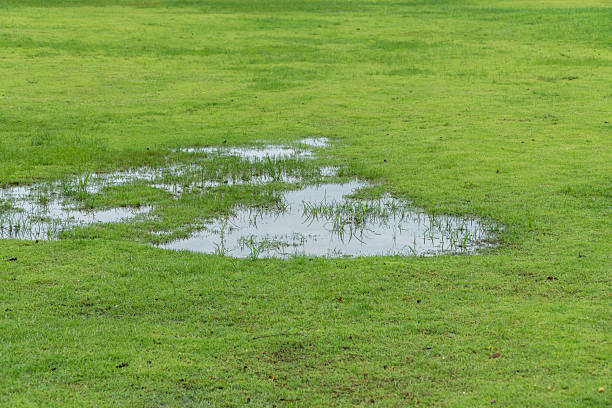
After a heavy Texas rainstorm, a few temporary wet areas aren't unusual. But if puddles remain in your lawn long after the rain has stopped, your property may have an underlying drainage problem.
Standing water can make your yard difficult to use, create muddy areas, contribute to erosion, and negatively affect lawns and landscaping. Depending on where the water collects, it can also interfere with patios, walkways, fencing, and other outdoor improvements.
The good news is that drainage problems can often be addressed once the source is properly identified.
At Prestige Landscape & Design, we provide professional drainage solutions throughout Dallas and the surrounding DFW area. Here's why water may be collecting in your yard and what can be done about it.
1. Your Yard Has Low Spots
Water naturally moves toward the lowest point of a property.
If certain areas of your lawn are lower than the surrounding ground, rainfall and irrigation runoff may collect there instead of continuing away from the property.
These low areas can develop because of the property's original grading or changes in the soil over time.
Depending on the situation, correcting the grade or incorporating an appropriate drainage system may help move water more effectively.
2. The Property Isn't Graded Correctly
Proper grading is one of the foundations of effective yard drainage.
Ideally, the landscape should direct water toward appropriate drainage areas rather than allowing it to settle around lawns, patios, or the home.
When the slope doesn't support effective runoff, even moderate rainfall can create recurring wet areas.
Grading problems should be evaluated before repeatedly replacing grass or adding landscaping to an area where water continually collects.
3. Your Soil Drains Slowly
Soil conditions can influence how quickly water moves into the ground.
When rainfall arrives faster than the soil can absorb it, water may remain on the surface. Compacted areas can also make drainage more difficult.
Before deciding on a solution, it's important to understand whether the problem is caused primarily by surface grading, soil conditions, runoff from another area, or several factors working together.
4. Downspouts Are Sending Water Into the Wrong Area
Your roof can collect a significant amount of rainwater during a storm.
Gutters and downspouts are designed to move that water away, but where the downspout releases it matters.
If water empties directly into a low section of the lawn or beside an outdoor living area, that location may become overwhelmed.
Downspout connections and extensions can be incorporated into a broader drainage plan to help manage roof runoff more effectively.
5. Hardscaping Has Changed Water Flow
Patios, concrete, pavers, walkways, and other hard surfaces don't absorb water the same way lawns and planting areas do.
When hardscaping is added to a property, rainfall must go somewhere.
If water movement isn't considered during design and installation, runoff may be redirected toward planting beds, lawns, fences, or other unwanted areas.
That's why drainage should be planned alongside paver, concrete, and hardscaping projects, rather than treated as an afterthought.
6. Your Irrigation System May Be Contributing
Not every wet yard is caused by rainfall.
If puddles appear even during dry weather, your irrigation system may deserve attention.
Potential issues can include excessive watering, damaged components, or coverage that repeatedly directs too much water toward one area.
Prestige Landscape & Design provides both irrigation repair and drainage services, allowing the overall water-management system to be evaluated instead of addressing only one symptom.
7. Water Is Being Trapped Around Landscape Features
Outdoor improvements can unintentionally create barriers that affect runoff.
Retaining walls, edging, patios, walkways, and other structures may influence where water travels.
This doesn't mean these features cause drainage problems when they're properly designed. It means water movement needs to be considered as part of the overall landscape plan.
A successful outdoor design should account for what happens during heavy rainfall—not only how the property looks on a dry day.
Why Standing Water Shouldn't Be Ignored
A soggy yard is inconvenient, but recurring standing water can also create broader landscape problems.
Over time, excessive moisture may contribute to:
- Muddy lawn areas
- Struggling turf
- Plant stress
- Soil erosion
- Unusable portions of the yard
- Problems around hardscape features
- Increased mosquito activity
The sooner the underlying cause is identified, the easier it is to develop a long-term solution instead of repeatedly treating the visible symptoms.
Common Drainage Solutions
There isn't one drainage system that's right for every property.
Depending on the landscape and source of the problem, solutions may include:
French Drains
French drains are designed to collect and redirect subsurface or surface water through a gravel-filled drainage system.
They can be useful in certain areas where water consistently accumulates.
Catch Basins
Catch basins collect surface runoff and connect it to underground drainage piping.
They may be positioned in low areas where water naturally gathers.
Downspout Connections
Connecting downspouts to an appropriate drainage route can help move roof runoff away from problem areas.
Grading Improvements
Sometimes the landscape itself needs to be reshaped so water can move more naturally.
Correcting elevations can be an important part of solving recurring drainage problems.
The appropriate solution depends on the specific conditions of the property.
Drainage Should Be Planned Before New Sod
If you're planning to install new sod, address significant drainage problems first.
Placing beautiful new grass over a consistently waterlogged area doesn't correct the reason the previous lawn struggled.
Correcting drainage before sod installation gives the new lawn a better foundation and helps protect your investment.
The same principle applies to synthetic turf. Proper preparation and water movement should be considered before installation.
Drainage Matters for Outdoor Living Projects
Planning a new patio, pergola, outdoor kitchen, or other backyard improvement?
Drainage should be part of the conversation from the beginning.
A well-designed outdoor living project considers:
- Where rainfall enters the property
- How water moves across hard surfaces
- Where downspouts discharge
- Existing low spots
- Patio elevations
- Nearby lawn and planting areas
- Appropriate drainage routes
Solving these details during the planning stage can help avoid modifications after construction is finished.
What About Water Near the House?
Water repeatedly collecting near the home deserves attention.
The landscape should generally manage runoff so it doesn't continually settle against structures.
Because drainage problems can vary considerably between properties, professional evaluation can help determine where the water is coming from and how the surrounding landscape is influencing its movement.
Avoid assuming that simply adding soil or installing a drain in a random location will solve the problem. Effective drainage requires understanding the entire path water takes across the property.
Why Professional Drainage Design Matters
Drainage is one area where treating the symptom isn't enough.
Installing a drain where you see a puddle may not work if the real problem originates elsewhere. Water could be coming from roof runoff, neighboring elevations, irrigation, hardscape surfaces, or improper grading.
Professional landscape drainage planning looks at the property as a complete system.
That makes it possible to choose solutions based on how water actually moves rather than relying on temporary fixes.
Final Thoughts
If you're wondering why water pools in your yard after rain, the answer may involve grading, low spots, roof runoff, irrigation, soil conditions, or changes caused by existing landscape features.
The right solution starts with identifying the source.

At Prestige Landscape & Design, we provide drainage solutions throughout Dallas and the surrounding DFW area, including French drains, catch basins, downspout connections, and grading. Our team can also coordinate drainage with irrigation, sod, synthetic turf, pavers, concrete, and complete landscape renovations.
Tired of dealing with standing water after every storm?
Contact Prestige Landscape & Design to discuss your drainage concerns and explore a solution designed around your property.
.svg)


