



.webp)
Choosing between pavers and poured concrete is a major Dallas patio decision. Both can create a durable outdoor living area, but they respond differently to North Texas heat, heavy rain, expansive soils, and seasonal movement.
The pavers vs concrete decision should consider more than appearance. Budget matters, but so do repairs, drainage, maintenance, installation quality, and how the patio fits the landscape.
Prestige Landscape helps Dallas-area homeowners plan around real property conditions. If you are comparing a concrete patio vs pavers, this guide explains the practical differences.
Pavers vs Concrete: The Quick Answer for Dallas Homeowners
For a simple patio with a controlled budget, poured concrete often has the lower initial installation cost. It creates a clean, continuous surface and can be finished in several ways.
Pavers usually require a larger upfront investment because the project involves individual units, detailed placement, edge restraint, joint material, and a prepared base. In return, pavers offer greater pattern flexibility and localized repair options.
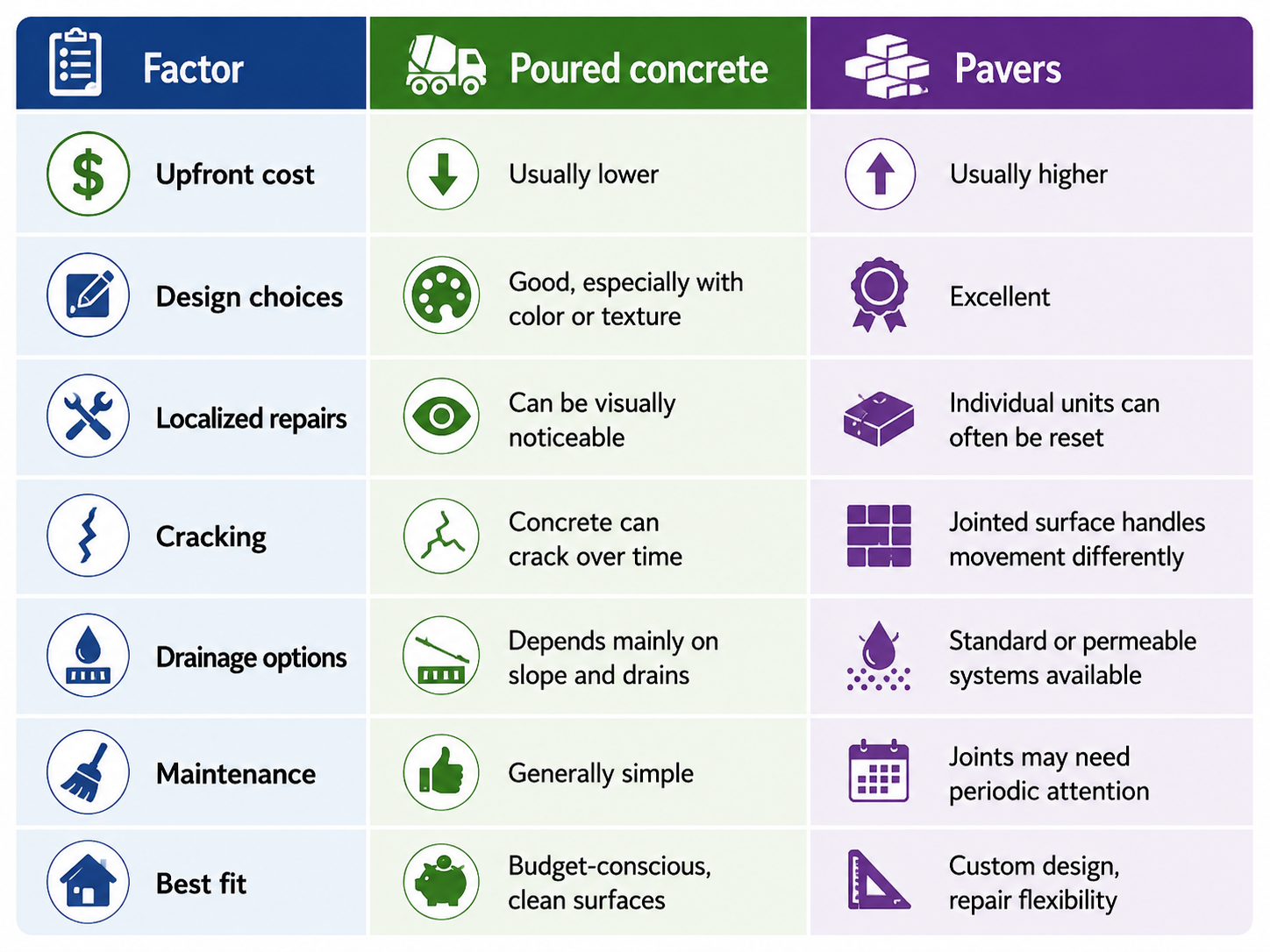
Neither material is automatically better for every North Texas property. The better choice depends on the yard, design priorities, and total project scope.
Pavers vs Concrete Cost: What Should You Expect?
When comparing pavers vs concrete cost, plain poured concrete usually begins at a lower price point than a professionally installed paver system. The difference comes from materials, labor, excavation, base preparation, layout, cutting, finishing, and edge details.
A basic rectangular concrete patio is generally more economical than a complex paver patio of the same size. However, decorative concrete, custom borders, staining, stamping, difficult access, demolition, drainage work, or major grading can narrow the price gap.
Cost of Paver Patio vs Concrete Patio
The cost of paver patio vs concrete patio installation should be compared using complete proposals, not just a price per square foot. One quote may include demolition, haul-off, grading, drainage correction, and final cleanup while another may not.
With pavers, the material itself also matters. Standard concrete pavers can cost less than premium large-format units, porcelain, or natural stone. Pattern complexity can affect labor because detailed layouts require more cuts and placement time.
With concrete, the finish changes pricing. A straightforward broom finish is usually less expensive than a decorative stamped or colored surface.
Homeowners comparing options can review Prestige Landscape's hardscaping services in Dallas and concrete patio installation services to understand how each material can fit a larger outdoor project.
Which Patio Holds Up Better in North Texas?
Durability is more complicated than asking which product is stronger. A patio performs as a complete system. Subgrade condition, base preparation, drainage, compaction, reinforcement, joints, edge restraint, and workmanship all matter.
How Poured Concrete Handles Dallas Conditions
Concrete is strong and practical, but it is a rigid material. North Texas soils can expand when wet and contract during dry periods. That movement can create stress below hard surfaces.
Control joints help manage where cracking occurs, and good grading helps keep water from creating unnecessary problems around the slab. Even well-built concrete can develop cracks over time, so a promise of completely crack-free outdoor concrete should be viewed cautiously.
How Pavers Handle Movement
Pavers are individual units installed over a prepared base. Because the surface contains joints, it responds differently to small amounts of movement than one continuous slab.
A section that settles can sometimes be lifted, the base corrected, and the pavers reset. That repair flexibility is one reason homeowners asking are pavers better than concrete often lean toward pavers for long-term adaptability.
Base Preparation Still Determines Performance
Pavers are not immune to settlement. A weak base can lead to uneven surfaces, low spots, loose edges, and shifting. Good patio paver installation in Dallas should account for the existing soil, planned use, drainage, and manufacturer requirements before the visible pavers are installed.
Do Pavers Last Longer Than Concrete?
Do pavers last longer than concrete? Both systems can provide decades of useful service when properly designed, installed, and maintained. The more important difference is how each surface ages and how repairs are handled.
A concrete slab may remain functional even with minor cracking. If a large section settles or needs replacement, matching the original color and finish can be difficult.
With pavers, individual pieces can often be replaced or reset. Replacement units may not perfectly match older weathered pavers, but repair work can often be confined to a smaller area.
Instead of choosing based only on a claimed lifespan, consider expected maintenance, repairability, soil conditions, and how long you expect to keep the current patio design.
Pavers vs Poured Concrete for Water Drainage
Water management is especially important during strong North Texas rain events. The patio should move water away from the home and avoid creating new low areas in the yard.
Drainage With a Concrete Patio
Standard poured concrete is essentially an impervious surface. Water flows across it according to the slope. That means elevations must be planned carefully, especially near foundations, doors, planting beds, and neighboring surfaces.
Some properties may also need drains or other water-management features. Prestige Landscape offers landscape drainage solutions when patio construction and existing water problems need to be considered together.
Drainage With Pavers
Standard pavers are not automatically permeable. A conventional paver patio still sheds much of its water and requires appropriate grading.
Permeable paver systems are different. They are designed with joints and an underlying aggregate system that allows water to move through the surface. When homeowners compare pavers vs poured concrete for water drainage, permeable pavers can offer a specific advantage where infiltration is appropriate for the property.
The full drainage plan still matters. Installing pavers without addressing an existing low spot will not automatically solve standing water.
Concrete vs Paver Patio Maintenance and Repairs
A concrete vs paver patio comparison should include what happens after installation.
Concrete typically needs routine cleaning, and decorative finishes may have additional care requirements. Cracks can sometimes be sealed or repaired, but patches may remain visible because new material rarely looks exactly like aged concrete.
Paver patios may need joint maintenance, occasional cleaning, and attention to weeds or movement depending on the installation system. If a localized area settles, however, individual pavers can often be removed and reset.
For homeowners who prioritize easy access to underground lines or the ability to make localized surface repairs, pavers may offer an advantage.
Which Option Gives You More Design Freedom?
Pavers usually win on variety. They come in different dimensions, textures, colors, shapes, and laying patterns. A patio can use borders, contrasting zones, or large-format units to coordinate with the architecture.
Concrete also offers more design flexibility than many homeowners expect. Color, exposed aggregate, scoring, and decorative finishes can move a slab beyond the look of basic gray concrete.
If the patio is part of a larger yard renovation, Prestige Landscape's landscape design services can help coordinate the surface with planting beds, sod, walkways, drainage, and other outdoor elements.
What About Heat and Comfort in a Dallas Summer?
Both concrete and pavers can become hot in direct Texas sun. Material color, surface texture, shade, and exposure can influence how a patio feels underfoot.
Dark pavers often absorb more solar heat than lighter surfaces. The same general principle applies to colored concrete. If barefoot comfort matters near a pool or seating area, compare actual samples in direct sun instead of choosing from indoor displays alone.
A pergola, mature tree canopy, or other intentional shade can sometimes make a larger comfort difference than switching between two similarly colored paving materials.
Are Pavers Better Than Concrete for Every Home?
No. The answer to are pavers better than concrete depends on what the homeowner values most.
Choose concrete when a lower initial budget is important, the patio design is relatively simple, and you prefer a continuous surface with straightforward maintenance.
Consider pavers when design variety, individual-unit repairability, pattern options, or a permeable system are higher priorities.
For some properties, mixing materials can also work. A concrete section might serve one functional zone while pavers create a transition, border, walkway, or feature area. The materials should still be planned together so grades and drainage remain consistent.
Pavers vs Concrete Patio Choices by Dallas Property Type
The pavers vs concrete patio decision can also change with the character of the home and yard.
In Lakewood, established landscapes and older architecture may pair naturally with textured pavers or understated concrete. In Preston Hollow and Highland Park, larger outdoor living plans may support premium paver layouts, decorative concrete, or combinations of materials.
Lake Highlands and Northeast Dallas properties can present mature roots, drainage concerns, existing irrigation, and older patios that need removal. Richardson, Garland, and Mesquite yards can vary just as widely in access, soil conditions, slope, and project size.
Location alone does not determine the right material. A site evaluation does.
Why Professional Installation Matters
Whether you choose patio paver installation in Dallas or concrete patio installation in Dallas, preparation beneath the finished surface is critical.
For concrete, that can involve excavation, subgrade preparation, forming, reinforcement, joint planning, slope, placement, and finishing. For pavers, it can involve excavation, compacted base material, bedding, edge restraint, cutting, joint material, and final compaction.
Related systems should be considered before construction. Moving irrigation lines or fixing drainage after the patio is installed can add avoidable cost.
Prestige Landscape takes a design-build approach to outdoor projects and coordinates hardscape with other property needs where appropriate. You can view completed outdoor projects to see examples of its work.
Frequently Asked Questions About Pavers vs Concrete
Is a paver patio more expensive than concrete?
Usually, yes. A simple poured concrete patio generally has a lower initial cost than professionally installed pavers. Premium decorative concrete can narrow the difference, while high-end pavers can increase it.
Do pavers crack like concrete?
Individual concrete pavers can crack, but the surface does not behave like one continuous poured slab. A damaged paver can often be replaced without removing the entire patio.
Is concrete better for a large patio?
Concrete can be cost-effective for a large, simple patio, but size alone should not make the decision. Drainage, soil, finish, design, and long-term repair preferences still matter.
Are pavers better for North Texas soil?
Pavers can offer repair flexibility when localized settlement occurs, but they still depend on a properly prepared base. Concrete can also perform well when the slab, joints, subgrade, and drainage are correctly planned.
Which is easier to repair, pavers or concrete?
Pavers are often easier to repair locally because individual units can be lifted and reset. Concrete repairs may remain more visible, particularly when matching an older color or finish.
Which patio is better for drainage?
Both require a drainage plan. Standard concrete and standard pavers shed water based on grade. A properly designed permeable paver system can allow water to pass through the surface, which may be useful on suitable sites.
Can Prestige Landscape install both concrete and paver patios?
Prestige Landscape provides hardscaping and concrete services for Dallas-area outdoor projects. A consultation can help determine which system better matches the property, budget, and design goals.
Choose the Right Patio for Your Dallas Home
There is no universal winner in the pavers vs concrete debate. Concrete often suits budget-focused, simple projects. Pavers can justify a higher initial investment when design flexibility, localized repair, or permeable options matter more.
The best result comes from matching the material to the site.
Learn more about Prestige Landscape & Design, read current customer feedback through the Prestige Landscape Google Business Profile, or request a patio consultation for a Dallas, Richardson, Garland, Mesquite, or nearby North Texas property.

Ready to start your patio project?Contact Prestige Landscape & Design today for a free consultation and discover which patio material is the perfect match for your Texas home.
.svg)


