



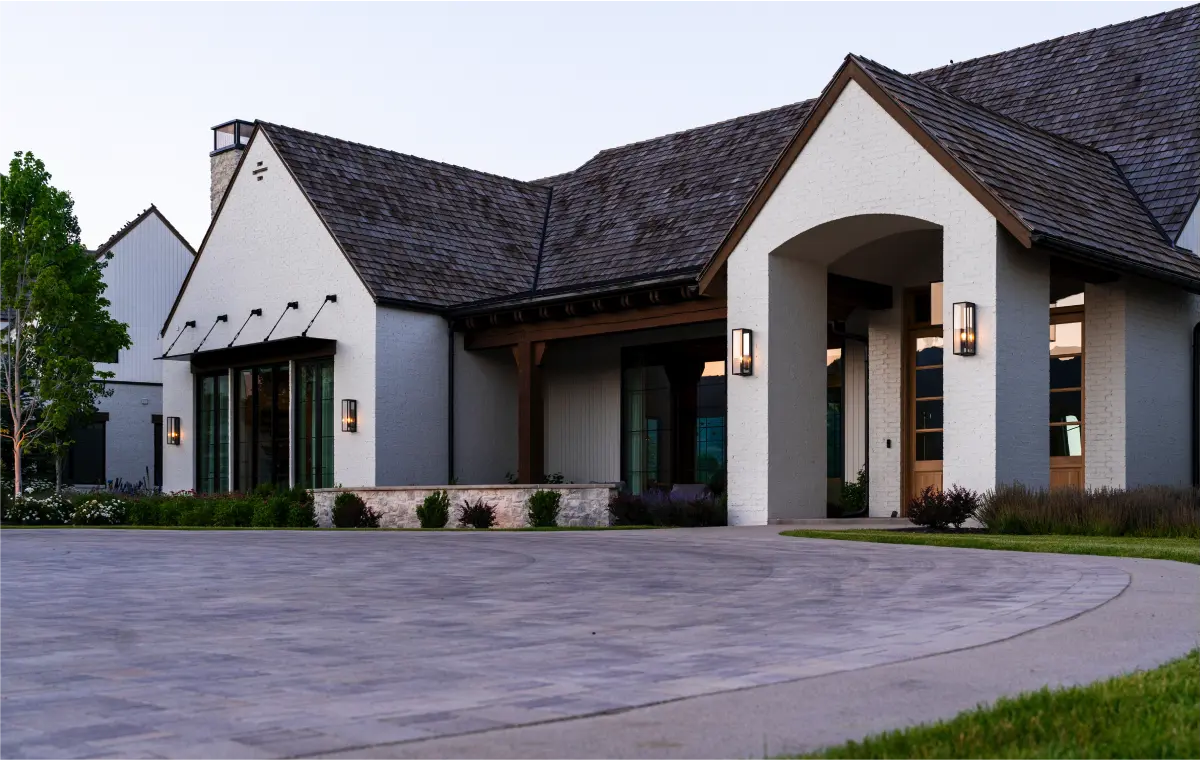
When it's time to install or replace a driveway, one of the biggest decisions is choosing the right material. Two popular options for Dallas homeowners are concrete and pavers. Both can create durable, attractive surfaces, but they offer different advantages depending on your budget, property, design preferences, and long-term expectations.
Choosing between them shouldn't come down to appearance alone. Installation, maintenance, repairability, drainage, and how the surface fits with the rest of your landscape should all be considered.
At Prestige Landscape & Design, we provide professional concrete and paver installation throughout the Dallas and DFW area. Here's what you should know before deciding which option makes sense for your property.
Concrete Driveways: Clean, Practical, and Versatile
Concrete remains a popular driveway material for good reason.
A professionally installed concrete driveway provides a strong, practical surface that works with many architectural styles. Its relatively simple appearance can also allow surrounding landscaping, trees, and other outdoor features to become the visual focus.
Concrete can be particularly appealing to homeowners looking for a straightforward combination of functionality and value.
Paver Driveways: More Design Flexibility
Pavers offer a very different appearance.
Individual units can be arranged in different patterns and combined with borders or contrasting elements to create a customized surface. That flexibility makes pavers attractive for homeowners who want the driveway to become part of the property's overall design.
Pavers can also coordinate with patios and walkways, helping create consistency throughout the landscape.
1. Compare the Overall Appearance
Concrete generally creates a clean and uniform surface.
A broom finish can provide texture while maintaining a classic appearance that works well for driveways and walkways.
Pavers provide greater flexibility in terms of pattern, texture, and layout. If customization is a major priority, they may offer more opportunities to create a distinctive design.
Neither option is automatically better. The right choice depends on your home and the look you're trying to achieve.
2. Consider Your Upfront Budget
Budget often plays a major role in choosing between concrete and pavers.
The complexity of the design, site preparation, materials, size of the installation, and other property conditions can all affect project cost.
Rather than focusing only on the initial price, homeowners should also consider maintenance and potential repair needs over the life of the surface.
3. Think About Long-Term Durability
Driveways need to withstand vehicle traffic, changing weather, and everyday use.
Whether you're installing concrete or pavers, long-term performance depends heavily on professional preparation and installation.
A beautiful surface installed over an inadequate base can develop problems regardless of the material selected.
Proper grading, base preparation, compaction, and drainage are essential parts of a durable finished project.
4. Understand How Repairs Differ
One important difference between the two materials is how repairs are handled.
Concrete is installed as a larger continuous surface. If significant damage occurs, repairing a section can sometimes leave a visible difference between the original and repaired areas.
With pavers, individual units can potentially be removed and replaced when necessary. This can make localized repairs less disruptive to the surrounding surface.
5. Don't Ignore Drainage
Driveway installation changes how water moves across a property.
Before installing either material, it's important to consider where rainfall will go once it reaches the finished surface.
Poor grading can cause water to collect on the driveway, move toward the home, or create problems elsewhere in the landscape.
Professional drainage and grading planning should therefore be part of the project—not something addressed after the driveway is complete.
6. Consider Maintenance Expectations
Homeowners should also think about how much ongoing attention they're comfortable providing.
Concrete offers a relatively straightforward surface, while pavers have joints that may require different maintenance over time.
The best option is the one that aligns with both your design goals and your expectations for long-term upkeep.
7. Think Beyond the Driveway
Your driveway is one of the largest visible hardscape features on the property.
It should work with your home's exterior as well as nearby landscaping, fencing, walkways, and planting areas.
If you're planning a larger outdoor renovation, choosing driveway materials as part of the overall landscape design can produce a much more cohesive result.
For example, paver details from a driveway might be repeated in a walkway or patio. A concrete driveway could also complement concrete pathways or other clean, modern hardscape features.
8. Consider Walkways at the Same Time
Driveway replacement can be a good opportunity to evaluate your property's walkways.
A damaged or outdated walkway next to a brand-new driveway may make the finished project feel incomplete.
Prestige Landscape & Design provides both concrete walkways and paver installations, allowing these areas to be considered together when appropriate.
9. Professional Installation Matters More Than You Think
Material selection gets a lot of attention, but installation quality is equally important.
Proper installation requires attention to:
- Site preparation
- Base conditions
- Grading
- Drainage
- Surface elevations
- Transitions to existing features
- Long-term water movement
Skipping these details can compromise even high-quality materials.
Working with experienced professionals helps ensure the surface is designed for the actual conditions of your property.
10. Which Option Is Right for You?
Choose based on your priorities rather than assuming one material is universally better.
A concrete driveway may make sense if you want a clean, practical surface with a classic appearance.
A paver driveway may be preferable if customization, pattern options, and individual-unit repairability are higher priorities.
You should also consider the surrounding landscape and any future improvements you're planning.
What About Concrete Walkways?
Concrete isn't limited to driveways.
Professionally installed concrete walkways can create safe, defined routes between entrances, driveways, patios, and other parts of the property.
A broom-finished walkway provides texture while maintaining a simple appearance that can work with many landscape styles.
When driveways and walkways are planned together, the property can feel more intentional and visually connected.

Contact Prestige Landscape & Design to discuss your property and determine which material best fits your project, budget, and design goals.
.svg)


