



.webp)
A well-designed patio should look good on installation day and continue performing through hot Texas summers, heavy rain, changing soil conditions, and everyday use. That makes material selection especially important for homeowners in Dallas and across North Texas.
The best pavers for patio projects are not automatically the most expensive option. The right choice depends on how the patio will be used, how much direct sun it receives, the style of the home, drainage needs, maintenance expectations, and budget.
This guide compares common patio paver types and explains where each performs best for Texas homes, with practical guidance from Prestige Landscape.
What Are the Best Pavers for Patio Projects in Texas?
For many Dallas properties, concrete pavers, brick pavers, natural stone, porcelain, travertine, and permeable systems are all realistic choices. Each has strengths, and no single material wins every category.
A quick comparison can help narrow the options:
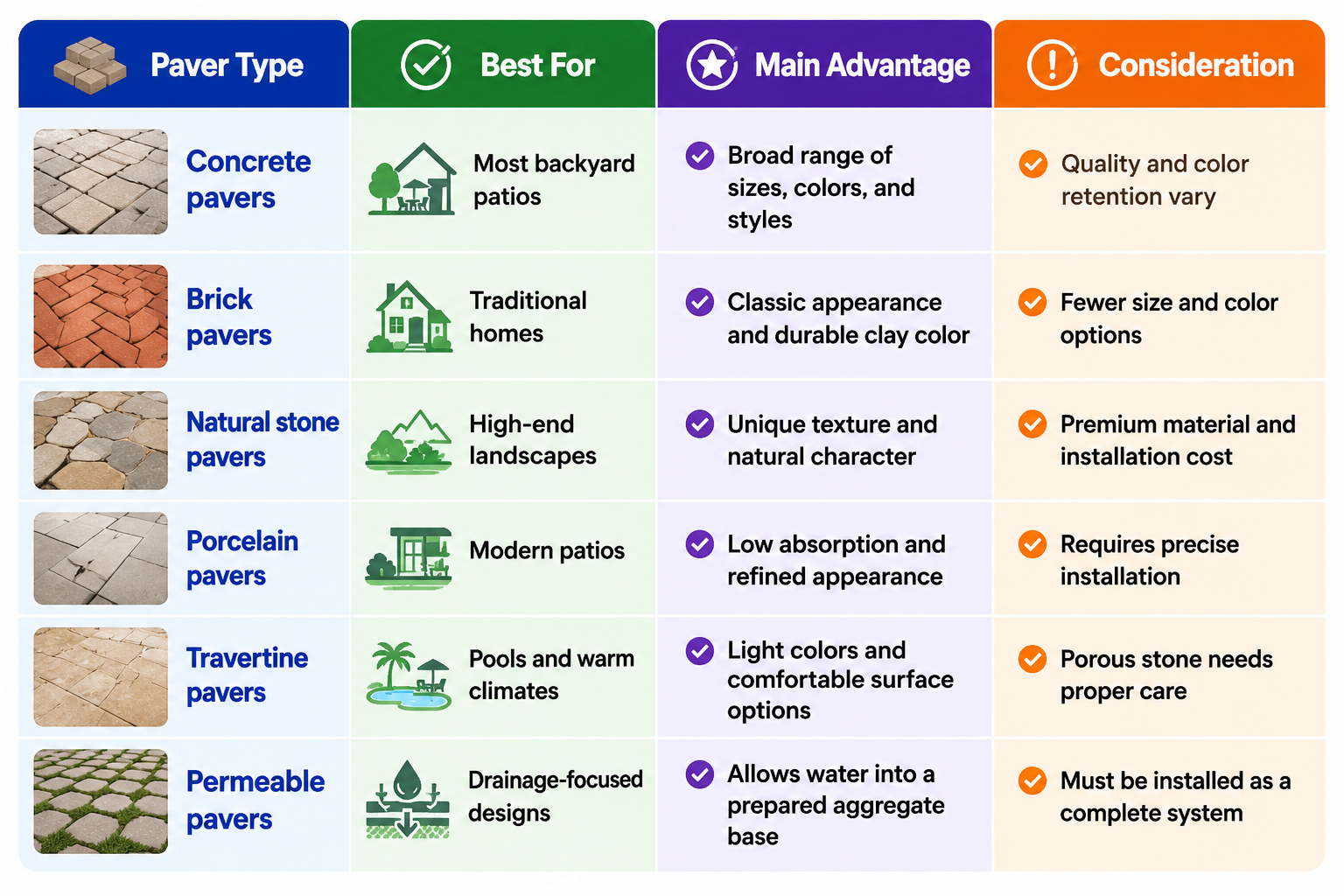
The best patio pavers should be selected after looking at the site, not just a showroom sample. Shade, soil, grade, water flow, trees, pool edges, and nearby structures can change which material makes the most sense.
Homeowners considering a complete patio project can explore Prestige Landscape's hardscaping services in Dallas for planning and installation options.
Concrete Pavers: A Versatile Choice for Dallas Backyards
Concrete pavers are among the best pavers for backyard patio projects because they offer a wide range of shapes, textures, sizes, and price points. They can suit a traditional brick-style layout or a clean modern design with large-format units.
Because concrete pavers are individual units, damaged or stained pieces can often be replaced without rebuilding the whole patio.
Concrete Pavers vs Brick Paver Options
When comparing concrete pavers vs brick paver materials, style is a major difference. Concrete can imitate stone, provide smooth contemporary finishes, or come in blended colors. Clay brick usually offers a narrower but very recognizable traditional appearance.
Homeowners who want maximum design flexibility often prefer concrete, while those seeking a classic established look may prefer fired-clay brick.
Are Concrete Pavers Good for Modern Patios?
Yes. Modern patio pavers often use larger rectangular or square concrete units with narrow joints and simple geometric layouts. Gray, cream, taupe, charcoal accents, and other restrained patio paver colors work well with contemporary architecture.
Brick Pavers for Patio Designs With Traditional Character
Brick pavers for patio projects work especially well with traditional homes, cottage-inspired landscapes, and older Dallas properties where a warm, established material feels appropriate.
Brick can be arranged in several patio paver patterns, including running bond, basketweave, and herringbone. Herringbone creates more visual movement, while running bond gives the patio a quieter appearance.
Proper edge restraint and a stable base help prevent brick from shifting over time. Warm reds, browns, and earth tones suit many traditional Texas homes.
Natural Stone Pavers for a Premium, Organic Look
Natural stone pavers bring variation that manufactured materials intentionally try to reproduce. Each piece can differ slightly in tone, veining, texture, or edge character.
Limestone, sandstone, travertine, and other stones vary in absorption, hardness, texture, and heat response, so the application matters.
Natural stone works well where homeowners want a softer transition between architecture and planting. Prestige Landscape can incorporate it into a broader landscape design plan.
Pavers vs Flagstone
The pavers vs flagstone decision usually comes down to appearance and installation style. Manufactured pavers have consistent dimensions, which creates regular joints and organized patterns. Flagstone is natural stone that is often installed in irregular pieces for a more organic look.
Flagstone can be attractive in garden-style settings, but variable thickness and irregular joints require careful installation. Standard pavers are generally better for homeowners who want a crisp grid, predictable pattern, or very consistent walking surface.
Porcelain Pavers for Patio Spaces With a Clean Finish
Porcelain pavers for patio construction have become popular for contemporary outdoor spaces. Outdoor-rated porcelain is dense, has low water absorption, resists many stains, and is available in finishes that resemble stone, concrete, or wood.
Porcelain Pavers vs Concrete Pavers
Porcelain pavers vs concrete pavers differ in both appearance and installation. Porcelain offers highly controlled color and surface designs with low absorption. Concrete pavers offer more thickness options, familiar installation systems, and a broad range of shapes and textures.
Porcelain can be one of the best pavers for low-maintenance luxury patio designs, but cuts, edges, bedding, and substrate must match the product system.
Travertine Pavers for Patio and Pool Areas
Travertine pavers for patio and pool areas are valued for their natural appearance and light color options. In a hot climate, lighter paving can be more comfortable than dark surfaces exposed to strong afternoon sun.
Travertine is naturally porous, so finish selection and appropriate care matter. Textured or tumbled surfaces are commonly better suited to outdoor use than polished stone.
What Are the Best Pool Pavers for Hot Climates?
The best pool pavers for hot climates balance surface temperature, slip resistance, durability, and appearance. Light travertine, exterior-rated porcelain, and textured concrete are strong candidates.
Heat and Color in Direct Sun
No outdoor paving stays completely cool in full Texas sun. Homeowners searching for patio pavers that don't get hot should focus on lighter colors, surface texture, shade, and material characteristics rather than expecting a heat-proof product.
Testing a sample in direct sun before making a final selection can be helpful.
Slip Resistance Around Water
For pool surrounds, non-slip patio pavers are especially important. Choose exterior products with a textured finish intended for wet areas and follow the manufacturer's suitability guidance.
Permeable Patio Pavers and Better Water Management
Permeable patio pavers are designed with joints or openings that allow water to pass through the surface into a specially prepared stone base. They can be useful where reducing surface runoff is part of the project goal.
The pavers alone do not solve drainage problems. A permeable system still needs proper excavation, aggregate, edge restraint, and a drainage strategy.
If standing water is already a concern, Prestige Landscape can evaluate landscape drainage solutions alongside patio construction. Coordinating pavers for drainage with the full yard plan is usually more effective than treating the patio as an isolated surface.
Pavers vs Concrete for Patio Construction
The pavers vs concrete for patio decision is one of the most common comparisons for Dallas homeowners.
Poured concrete usually offers a lower starting cost for a simple patio and creates a continuous surface. It can also be finished, colored, or patterned. Pavers typically cost more upfront, but they offer more design flexibility and allow individual units to be removed for certain repairs or underground access.
North Texas soil movement makes base preparation, drainage, joints, and installation quality important for either system.
Homeowners comparing both options can review Prestige Landscape's concrete patio services before deciding which construction method better fits the property.
How to Choose Patio Paver Colors for Texas Sun
Patio paver colors affect more than appearance. Darker surfaces tend to absorb more solar heat, while lighter colors may feel more comfortable in exposed spaces. Very light materials can show certain stains more easily, so practical use also matters.
Warm beige, limestone, sand, and muted tan tones fit many Texas landscapes. Gray and greige work well with modern homes, while red and brown brick tones complement traditional architecture.
Choose one main field color and use borders or accents sparingly so nearby stone, brick, planting, and furniture do not compete visually.
Patio Paver Patterns Can Change the Entire Look
The same paver can feel traditional or contemporary depending on the layout. Running bond is simple and adaptable. Herringbone adds movement and works particularly well with rectangular units. Modular patterns combine multiple sizes for a natural, less repetitive effect.
Large-format grids look modern, while mixed-size stone patterns feel more relaxed.
Long lines can visually widen a patio, while borders can define dining or seating areas.
What Makes the Best Pavers for Outdoor Patio Use?
The best pavers for outdoor patio areas should match real use. Consider sun, wet zones, furniture, pets, grills, trees, drainage, and maintenance.
Slip resistance matters near water, heat matters in full sun, and stain resistance matters around dining areas.
Material quality also varies within each category. A premium concrete paver and a basic concrete paver should not be judged as identical products simply because both are made from concrete.
Why Installation Quality Matters as Much as Paver Type
Even the best patio pavers can perform poorly over an inadequate base. Good patio paver installation in Dallas begins below the visible surface.
Preparation can include excavation, compaction, aggregate, grade control, bedding, edge restraint, joint material, and drainage. The exact system depends on the product and site.
Irrigation lines, downspouts, roots, and existing hardscape should also be addressed before paving.
Prestige Landscape's design-build approach can coordinate hardscaping with irrigation, drainage, and surrounding landscaping.
Choosing the Best Pavers for Your Dallas Home
The best pavers for patio construction should fit the property, not just a design trend. A Lakewood home may call for brick or natural stone that works with mature landscaping. A contemporary property in Preston Hollow may benefit from large-format porcelain or concrete. A sunny pool area in Lake Highlands may prioritize lighter, textured materials.
Properties in Highland Park, Northeast Dallas, Richardson, Garland, and Mesquite can also differ widely in grade, shade, and drainage.
Before choosing, compare samples outdoors beside the home and view them at different times of day.
You can browse completed outdoor projects by Prestige Landscape for ideas before planning your own space.
Frequently Asked Questions About Patio Pavers
What are the best pavers for patio areas in Dallas?
Concrete is versatile, brick suits traditional designs, porcelain fits modern spaces, and natural stone or travertine provides a premium look. The best option depends on heat, drainage, style, budget, and maintenance.
What are the best pavers for low-maintenance luxury patio designs?
Exterior porcelain is a strong low-absorption option. High-quality concrete pavers can also create a luxury appearance with straightforward routine maintenance.
Which patio pavers stay coolest in Texas heat?
No paver stays cool in the intense sun. Light-colored travertine, porcelain, and concrete are better candidates when surface temperature is a priority.
Are pavers better than poured concrete?
Neither material is automatically better. Pavers offer design flexibility and individual-unit repairability, while poured concrete can provide a simpler surface at a lower initial cost. Site conditions and project goals should guide the choice.
Are porcelain pavers slippery?
Outdoor porcelain is available with textured surfaces designed for exterior use. Around pools or wet zones, choose a product specifically rated or recommended by its manufacturer for that application.
Can pavers help with backyard drainage?
Permeable paver systems can reduce surface runoff when installed over the correct drainage base. Standard pavers still require proper grading because joints alone do not fix a drainage problem.
What paver pattern is best for a modern patio?
Large-format grids, running bond layouts, and simple linear patterns complement modern patio pavers. Keeping the color palette restrained also helps create a clean contemporary appearance.
Plan Your Patio With Prestige Landscape
Choosing among the many types of patio pavers is easier when drainage, grade, architecture, and landscaping are considered together. Prestige Landscape provides patio and hardscape planning for Dallas-area homeowners.
Homeowners can learn more about Prestige Landscape & Design, read current customer feedback on the Prestige Landscape Google Business Profile, or request a patio consultation and estimate.
A successful paver patio starts with the right material, but it lasts because the entire system is planned correctly from the ground up.

.svg)


